Manufacturers today are under constant pressure to improve productivity, reduce costs, and maintain quality while responding faster to market demands. Yet many factories still rely on paper-based processes for work instructions, quality checks, maintenance records, and production tracking. These manual methods often create delays, errors, and data silos that limit operational efficiency.
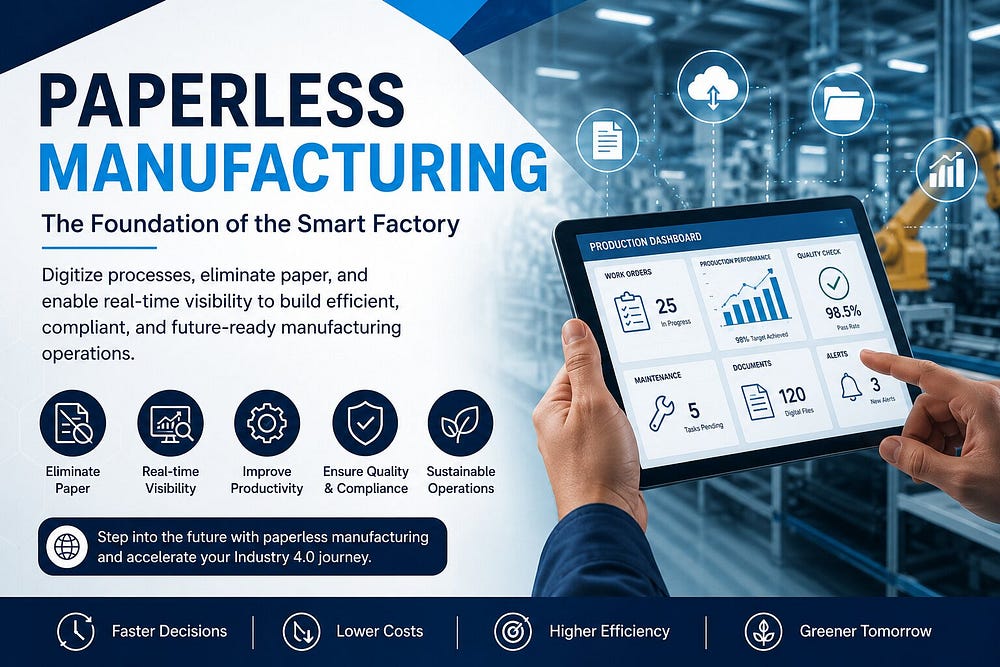
Paperless Manufacturing offers a smarter alternative. By replacing paper documents with digital workflows, manufacturers can access real-time production data, streamline operations, and improve decision-making across the shop floor. Modern paperless factories use digital work instructions, electronic records, automated approvals, and integrated manufacturing systems to ensure accurate and efficient execution of production activities.
One of the biggest advantages of paperless manufacturing is improved operational visibility. Production managers can monitor machine performance, track work orders, and identify bottlenecks in real time instead of waiting for manual reports. This digital approach becomes even more powerful when combined with Manufacturing Operations Management (MOM) solutions that connect production, quality, maintenance, and inventory processes into a unified ecosystem.
Another major benefit is productivity. Operators no longer need to spend valuable time filling out forms, searching for documents, or manually entering data. Information is automatically captured and shared across connected systems, reducing administrative workload and allowing employees to focus on value-added tasks. Organizations implementing paperless initiatives often see significant improvements in efficiency, quality, and compliance.
Paperless manufacturing also plays a key role in the broader Smart Manufacturing journey. With accurate digital data available across the production lifecycle, manufacturers can leverage analytics, automation, and connected technologies to optimize workflows and support continuous improvement initiatives. Digital records further enhance traceability and regulatory compliance while reducing paper consumption and operational costs.
As Industry 4.0 adoption accelerates, paperless manufacturing is becoming a critical step toward building connected and intelligent factories. Companies that digitize their operations gain greater agility, improved decision-making capabilities, and a stronger competitive advantage in today’s rapidly evolving manufacturing landscape.