Thursday, June 25, 2026

ServiceNow Autonomous Workforce: The Future of Intelligent Enterprise Automation


Artificial intelligence is no longer limited to chatbots or virtual assistants. Modern enterprises are moving toward autonomous operations, where AI not only recommends actions but also completes business processes. This is where ServiceNow Autonomous Workforce is transforming enterprise productivity.

Unlike traditional AI tools that require constant human intervention, ServiceNow Autonomous Workforce introduces AI specialists that can understand requests, make decisions within predefined governance policies, and execute workflows from start to finish. These AI-powered digital workers help organizations automate repetitive tasks while allowing employees to focus on innovation, customer relationships, and strategic decision-making.

One of the biggest advantages of ServiceNow Autonomous Workforce is its ability to operate across multiple business functions. Whether it’s IT Service Management (ITSM), HR Service Delivery, Customer Service Management (CSM), Security Operations, or procurement, AI specialists can resolve common issues, process requests, and accelerate service delivery without compromising compliance or security. Built on the ServiceNow AI Platform, every action is governed through enterprise-grade permissions, audit trails, and policy controls.

Organizations adopting autonomous workflows are seeing measurable improvements in operational efficiency. AI specialists can automatically classify incidents, assign tickets, retrieve knowledge, perform routine troubleshooting, and escalate only when human expertise is required. This significantly reduces response times, lowers operational costs, and improves employee satisfaction by eliminating repetitive manual work.

Another key differentiator is continuous learning. As AI specialists interact with users and business processes, they improve through feedback and historical context, enabling smarter recommendations and more accurate automation over time. This creates a scalable digital workforce that grows alongside the business while maintaining governance and transparency.

For enterprises pursuing digital transformation, ServiceNow Autonomous Workforce is more than an AI feature - it is a strategic capability that bridges automation, governance, and intelligent decision-making. Businesses can reduce manual workloads, accelerate service delivery, strengthen compliance, and improve customer and employee experiences through secure, end-to-end workflow automation.

As enterprise AI continues to evolve, organizations that embrace autonomous workflows today will be better positioned to build resilient, scalable, and future-ready operations. ServiceNow Autonomous Workforce represents the next generation of enterprise automation, where humans and AI collaborate seamlessly to deliver faster outcomes, greater efficiency, and lasting business value.
Tuesday, June 23, 2026

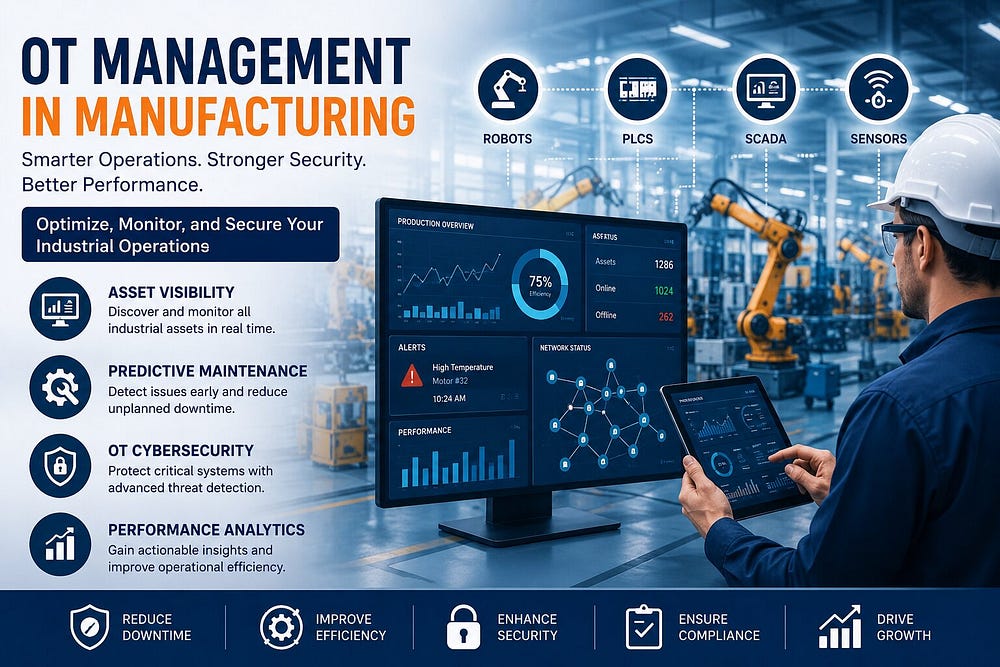
OT Management in Manufacturing: Building Smarter, Safer, and More Resilient Operations


Manufacturers today operate in an environment where downtime is costly, cyber threats are increasing, and production efficiency directly impacts profitability. As factories become more connected through Industrial IoT, automation, and smart technologies, Operational Technology (OT) Management has emerged as a critical business function.

OT Management refers to the governance, monitoring, maintenance, and security of industrial systems that control physical operations, including PLCs, SCADA systems, sensors, robotics, and production equipment. Unlike traditional IT systems that manage data, OT systems control real-world industrial processes and machinery.

Why OT Management Matters in Manufacturing

Modern manufacturing facilities rely on hundreds or even thousands of interconnected assets. Without proper OT management, organizations face challenges such as:

  • Unplanned production downtime
  • Limited visibility into industrial assets
  • Increased cybersecurity risks
  • Compliance and safety concerns
  • Higher maintenance and operational costs

Effective OT management creates a centralized approach to monitoring assets, managing risks, and optimizing plant performance. It enables manufacturers to maintain operational continuity while supporting digital transformation initiatives.

Key Components of Effective OT Management

1. Asset Visibility and Inventory Management

You cannot manage what you cannot see. A comprehensive inventory of OT assets helps organizations understand their industrial environment, identify vulnerabilities, and improve maintenance planning. Asset visibility serves as the foundation for operational resilience and cybersecurity.

2. Predictive Maintenance

By collecting real-time data from machines and sensors, manufacturers can detect performance issues before failures occur. Predictive maintenance reduces downtime, extends equipment lifespan, and lowers maintenance expenses.

3. OT Cybersecurity

As IT and OT environments continue to converge, industrial systems are increasingly exposed to cyber threats. Modern OT management strategies include network segmentation, continuous monitoring, access controls, and threat detection to protect critical production systems.

4. Performance Monitoring and Analytics

Real-time dashboards and analytics help operations teams track machine utilization, production efficiency, and operational bottlenecks. These insights support faster decision-making and continuous improvement initiatives.

Benefits of OT Management for Manufacturers

Organizations that invest in OT management can achieve:

  • Improved operational efficiency
  • Reduced production downtime
  • Enhanced cybersecurity posture
  • Better regulatory compliance
  • Increased asset reliability
  • Greater visibility across plant operations
  • Stronger support for Industry 4.0 initiatives

Industry experts increasingly emphasize that asset management and visibility are foundational requirements for building secure and resilient OT environments.

The Future of OT Management

As manufacturing continues its digital transformation journey, OT management will evolve beyond monitoring and maintenance. AI-driven analytics, autonomous operations, digital twins, and advanced cybersecurity capabilities will help manufacturers create smarter and more resilient factories. Organizations that establish strong OT management practices today will be better positioned to improve productivity, reduce risk, and maintain a competitive advantage in the years ahead.

Conclusion

OT Management is no longer optional for modern manufacturers. It is a strategic capability that connects operational efficiency, cybersecurity, asset performance, and business resilience. By implementing a structured OT management framework, manufacturers can unlock greater visibility, reduce operational risks, and accelerate their journey toward smart manufacturing excellence.

Monday, June 22, 2026

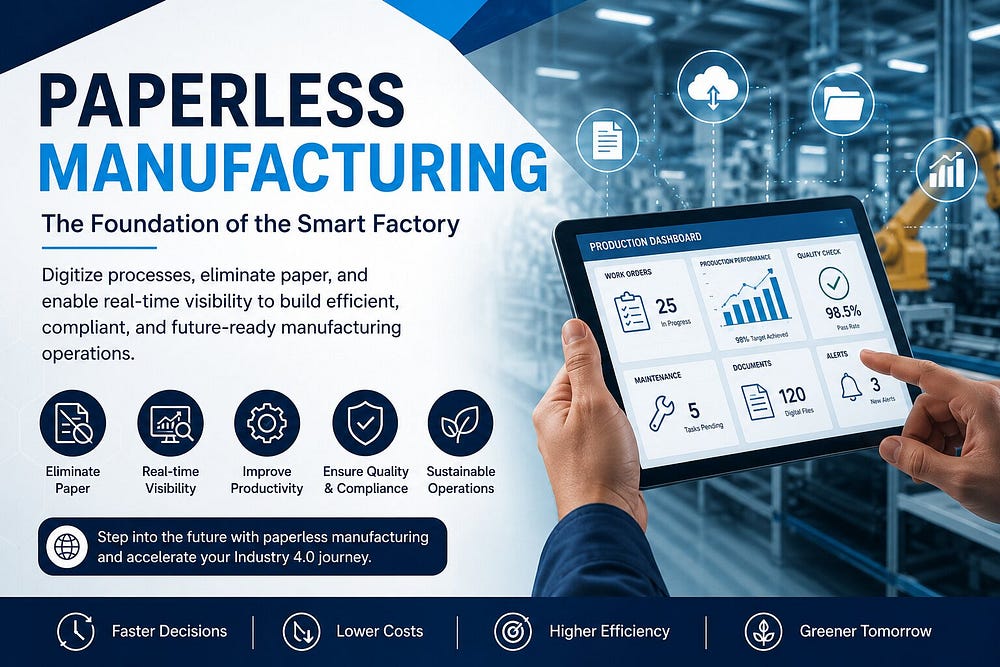
Paperless Manufacturing: The Foundation of the Smart Factory


Manufacturers today are under constant pressure to improve productivity, reduce costs, and maintain quality while responding faster to market demands. Yet many factories still rely on paper-based processes for work instructions, quality checks, maintenance records, and production tracking. These manual methods often create delays, errors, and data silos that limit operational efficiency.

Paperless Manufacturing offers a smarter alternative. By replacing paper documents with digital workflows, manufacturers can access real-time production data, streamline operations, and improve decision-making across the shop floor. Modern paperless factories use digital work instructions, electronic records, automated approvals, and integrated manufacturing systems to ensure accurate and efficient execution of production activities.

One of the biggest advantages of paperless manufacturing is improved operational visibility. Production managers can monitor machine performance, track work orders, and identify bottlenecks in real time instead of waiting for manual reports. This digital approach becomes even more powerful when combined with Manufacturing Operations Management (MOM) solutions that connect production, quality, maintenance, and inventory processes into a unified ecosystem.

Another major benefit is productivity. Operators no longer need to spend valuable time filling out forms, searching for documents, or manually entering data. Information is automatically captured and shared across connected systems, reducing administrative workload and allowing employees to focus on value-added tasks. Organizations implementing paperless initiatives often see significant improvements in efficiency, quality, and compliance.

Paperless manufacturing also plays a key role in the broader Smart Manufacturing journey. With accurate digital data available across the production lifecycle, manufacturers can leverage analytics, automation, and connected technologies to optimize workflows and support continuous improvement initiatives. Digital records further enhance traceability and regulatory compliance while reducing paper consumption and operational costs.

As Industry 4.0 adoption accelerates, paperless manufacturing is becoming a critical step toward building connected and intelligent factories. Companies that digitize their operations gain greater agility, improved decision-making capabilities, and a stronger competitive advantage in today’s rapidly evolving manufacturing landscape.

Wednesday, June 17, 2026

How OT Risk Management Protects Manufacturers


Operational Technology (OT) plays a critical role in modern manufacturing by controlling industrial equipment, production lines, and essential operational processes. As manufacturers adopt Industry 4.0 technologies and connect more devices to their networks, the risk of cyber threats and operational disruptions continues to grow. Implementing effective OT Risk Management for Manufacturers helps organizations protect critical assets, improve operational resilience, and maintain business continuity.

Manufacturing environments rely on OT systems such as industrial control systems (ICS), SCADA platforms, sensors, and programmable logic controllers (PLCs). These systems were originally designed for performance and reliability rather than cybersecurity. As a result, they can become attractive targets for cybercriminals seeking to disrupt production or gain unauthorized access to critical infrastructure. A single security incident can lead to production downtime, financial losses, safety concerns, and reputational damage.

One of the primary benefits of OT Risk Management for Manufacturers is improved visibility into operational assets and vulnerabilities. By identifying critical systems, monitoring network activity, and conducting regular risk assessments, manufacturers can better understand potential threats and take proactive measures to reduce risk. Continuous monitoring enables organizations to detect unusual behavior early and respond before disruptions occur.

OT risk management also strengthens cybersecurity defenses across manufacturing operations. Implementing network segmentation, access controls, multi-factor authentication, and secure remote access policies helps protect sensitive systems from unauthorized access. Regular patch management and vulnerability assessments further reduce exposure to cyber threats while supporting a stronger security posture.

In addition to cybersecurity protection, OT risk management helps manufacturers improve operational reliability. By identifying potential points of failure and implementing preventive controls, organizations can reduce unexpected downtime and maintain consistent production performance. This proactive approach supports higher productivity levels and minimizes costly disruptions that impact supply chains and customer commitments.

Regulatory compliance is another important advantage. Many industries require manufacturers to follow strict security and operational standards. A structured OT risk management framework helps organizations align with industry regulations, demonstrate compliance, and strengthen stakeholder confidence.

As manufacturing becomes increasingly digital, OT environments will continue to face evolving risks. Organizations that invest in OT Risk Management for Manufacturers can better protect critical infrastructure, ensure worker safety, and support long-term business growth. By combining risk assessment, cybersecurity best practices, and continuous monitoring, manufacturers can build resilient operations capable of adapting to emerging challenges while maintaining efficiency and competitiveness.

Thursday, June 11, 2026

The Growing Importance of Financial Services CRM Solutions


In today’s digital-first economy, financial institutions are under pressure to deliver faster, smarter, and more personalized customer experiences. Traditional systems are no longer enough to manage evolving client expectations, regulatory demands, and competitive market dynamics. This is where financial services CRM solutions become essential.

Why CRM Matters in Financial Services

A Customer Relationship Management (CRM) platform helps banks, insurance companies, wealth managers, and lending institutions centralize customer data, automate workflows, and improve engagement. Unlike generic CRM tools, CRM solutions for financial services are designed specifically to address industry-specific needs such as compliance, risk management, portfolio tracking, and secure customer communication.

Key Benefits of Financial Services CRM Solutions

1. Personalized Customer Experiences

Modern customers expect tailored financial advice and proactive support. CRM platforms analyze customer behavior, transaction history, and preferences to help advisors deliver personalized recommendations and timely communication.

2. Improved Operational Efficiency

Manual processes slow down productivity and increase the risk of errors. Financial services CRM solutions automate tasks like lead management, document collection, follow-ups, and reporting, allowing teams to focus on high-value activities.

3. Enhanced Compliance and Security

Financial institutions must comply with strict regulations and protect sensitive customer data. Industry-specific CRM systems offer built-in compliance tools, audit trails, and secure data management to reduce risk and maintain trust.

4. Better Relationship Management

A unified customer view enables teams to track interactions across channels, manage client portfolios, and identify cross-selling or upselling opportunities. This strengthens long-term relationships and increases customer retention.

5. Data-Driven Decision Making

Advanced analytics and reporting features provide insights into customer trends, sales performance, and operational bottlenecks. Financial institutions can use this data to make informed decisions and improve business strategies.

The Future of CRM in Financial Services

As artificial intelligence and automation continue to evolve, CRM platforms are becoming more intelligent and proactive. AI-powered insights, predictive analytics, and conversational tools are helping financial organizations deliver faster service and more accurate recommendations.

Cloud-based CRM solutions are also gaining popularity due to their scalability, flexibility, and ability to support remote teams securely.

Final Thoughts

Investing in the right financial services CRM solutions is no longer optional - it’s a strategic necessity. By improving customer engagement, streamlining operations, and ensuring compliance, these platforms empower financial institutions to stay competitive in a rapidly changing market.

Whether you are a bank, insurance provider, or wealth management firm, adopting specialized CRM solutions for financial services can help you build stronger client relationships and drive sustainable growth.

Monday, June 8, 2026

Why OT Security Is Becoming Critical for Modern Manufacturing

Manufacturing is no longer driven only by machines and manual operations. Today’s factories are powered by connected systems, industrial IoT devices, automation platforms, and smart production lines. While this digital transformation improves efficiency and productivity, it also introduces serious cybersecurity risks. This is where OT Security becomes essential.

Operational Technology (OT) environments control critical manufacturing operations such as PLCs, SCADA systems, sensors, robotics, and industrial control systems. Unlike traditional IT systems, OT networks directly impact physical operations. A cyberattack on these systems can lead to production downtime, equipment damage, supply chain disruption, and even safety risks for workers.

As manufacturers continue adopting Industry 4.0 technologies, attackers are increasingly targeting connected factory environments. Many organizations still rely on legacy systems that were never designed with cybersecurity in mind. Combined with remote access, third-party integrations, and IT/OT convergence, the attack surface continues to grow rapidly.

Implementing a strong OT Security Solution helps manufacturers gain visibility into operational assets, monitor industrial networks, detect anomalies, and reduce cybersecurity risks without interrupting production processes. Key strategies include network segmentation, continuous monitoring, access control, vulnerability management, and secure IT/OT integration.

Organizations are now moving toward unified IT and OT security models to improve operational resilience and protect smart factory ecosystems. Businesses that proactively invest in OT security are better prepared to maintain uptime, ensure compliance, and safeguard critical infrastructure against evolving cyber threats.

With manufacturing becoming increasingly connected, cybersecurity can no longer be treated as an afterthought. A proactive OT security strategy not only protects operations but also supports long-term digital transformation goals. Companies that prioritize industrial cybersecurity today will be in a stronger position to maintain operational continuity, reduce risks, and build resilient smart manufacturing environments for the future.

Wednesday, June 3, 2026

How CRM Software for Insurance Agents Is Transforming Customer Experience in 2026


Insurance agencies today face increasing pressure to deliver faster responses, personalized customer experiences, and seamless policy management. However, many insurance agents still rely on disconnected systems, spreadsheets, and manual follow-ups that slow operations and impact customer satisfaction. This is where modern CRM platforms are transforming the insurance industry.

A reliable CRM software for insurance agents helps businesses centralize customer information, automate repetitive tasks, and improve engagement across the entire policy lifecycle. From lead management and quote tracking to claims communication and policy renewals, CRM systems allow insurance teams to work more efficiently while improving customer retention.

One of the biggest advantages of insurance CRM solutions is visibility. Agents can access policyholder history, communication records, support requests, and renewal timelines from a single platform. This enables faster responses and more personalized interactions, helping insurers build stronger long-term relationships with customers.

Automation is another major benefit. Insurance agencies handle multiple repetitive processes every day, including follow-up reminders, document collection, renewal notifications, and claim status updates. CRM platforms automate these workflows, reducing manual effort and allowing agents to focus on customer service and revenue growth.

Modern CRM solutions are also becoming increasingly AI-driven. Predictive insights help insurers identify upsell opportunities, prioritize high-value leads, and detect potential customer churn before it happens. As digital transformation accelerates across the insurance sector, AI-powered CRM platforms are becoming essential for operational efficiency and competitive advantage.

Organizations looking to modernize their insurance operations should explore how enterprise platforms are evolving beyond traditional CRM functionality. Solutions like ServiceNow combine customer engagement, workflow automation, AI, and service management into a connected operational ecosystem.

To understand how insurers are improving customer experiences and streamlining operations in 2026, explore this detailed guide on CRM software for insurance agents.

As customer expectations continue to rise, insurance agencies that invest in intelligent CRM platforms will be better positioned to improve retention, operational agility, and long-term business growth.


Monday, June 1, 2026

How ServiceNow Strategic Portfolio Management Helps Enterprises Drive Smarter Business Decisions


In today’s fast-changing digital landscape, organizations need more than traditional project management tools to stay competitive. Businesses require a strategic approach that connects investments, resources, and execution with long-term business goals. This is where ServiceNow Strategic Portfolio Management (SPM) plays a crucial role. It enables enterprises to align strategy with delivery while improving visibility, governance, and operational efficiency across the organization.

Many enterprises still struggle with disconnected systems, manual workflows, and limited visibility into project performance. These challenges often lead to delayed deliveries, budget overruns, and poor resource utilization. ServiceNow SPM addresses these issues by providing a unified platform for portfolio planning, demand management, resource allocation, and investment prioritization. By centralizing all strategic initiatives in one place, organizations can make faster and more data-driven decisions.

One of the key benefits of ServiceNow SPM is its ability to improve collaboration across departments. Leadership teams gain real-time insights into project health, financial performance, and resource capacity, allowing them to prioritize initiatives that deliver the highest business value. This level of transparency helps organizations reduce operational silos and improve overall business agility.

According to Aelum Consulting, implementing ServiceNow SPM also helps businesses streamline governance processes and accelerate digital transformation initiatives. With automated workflows and intelligent reporting capabilities, enterprises can reduce manual effort while increasing efficiency and accountability.

Another major advantage of ServiceNow Strategic Portfolio Management is its scalability. Whether organizations are managing small projects or enterprise-wide transformation programs, the platform adapts to changing business needs while maintaining strategic alignment. Companies can effectively track KPIs, manage risks, and optimize investments from a single intelligent ecosystem.

As businesses continue to prioritize operational efficiency and innovation, ServiceNow SPM is becoming an essential solution for modern enterprises. Partnering with experienced ServiceNow experts like Aelum Consulting’s ServiceNow SPM team ensures successful implementation and faster realization of business value.

Organizations that adopt ServiceNow Strategic Portfolio Management gain a competitive advantage by transforming strategy into measurable outcomes while improving productivity, collaboration, and decision-making across the enterprise.