In an era where digital transformation fuels rapid business growth, safeguarding networks has become more critical - and more complex - than ever before. Traditional security tools, though foundational, often struggle to cope with the volume, velocity, and sophistication of modern cyber threats. This ongoing challenge has driven enterprises to embrace Artificial Intelligence (AI) for network security and monitoring, resulting in smarter, faster, and more adaptive protection strategies.
AI’s influence on network security can no longer be treated as a futuristic concept; it has evolved into a core requirement for enterprises seeking resilience and operational efficiency. By integrating machine learning, behavioral analytics, and automation, AI-driven security systems provide deep visibility into network traffic, endpoints, and unusual user behavior - enabling proactive threat detection and rapid response.
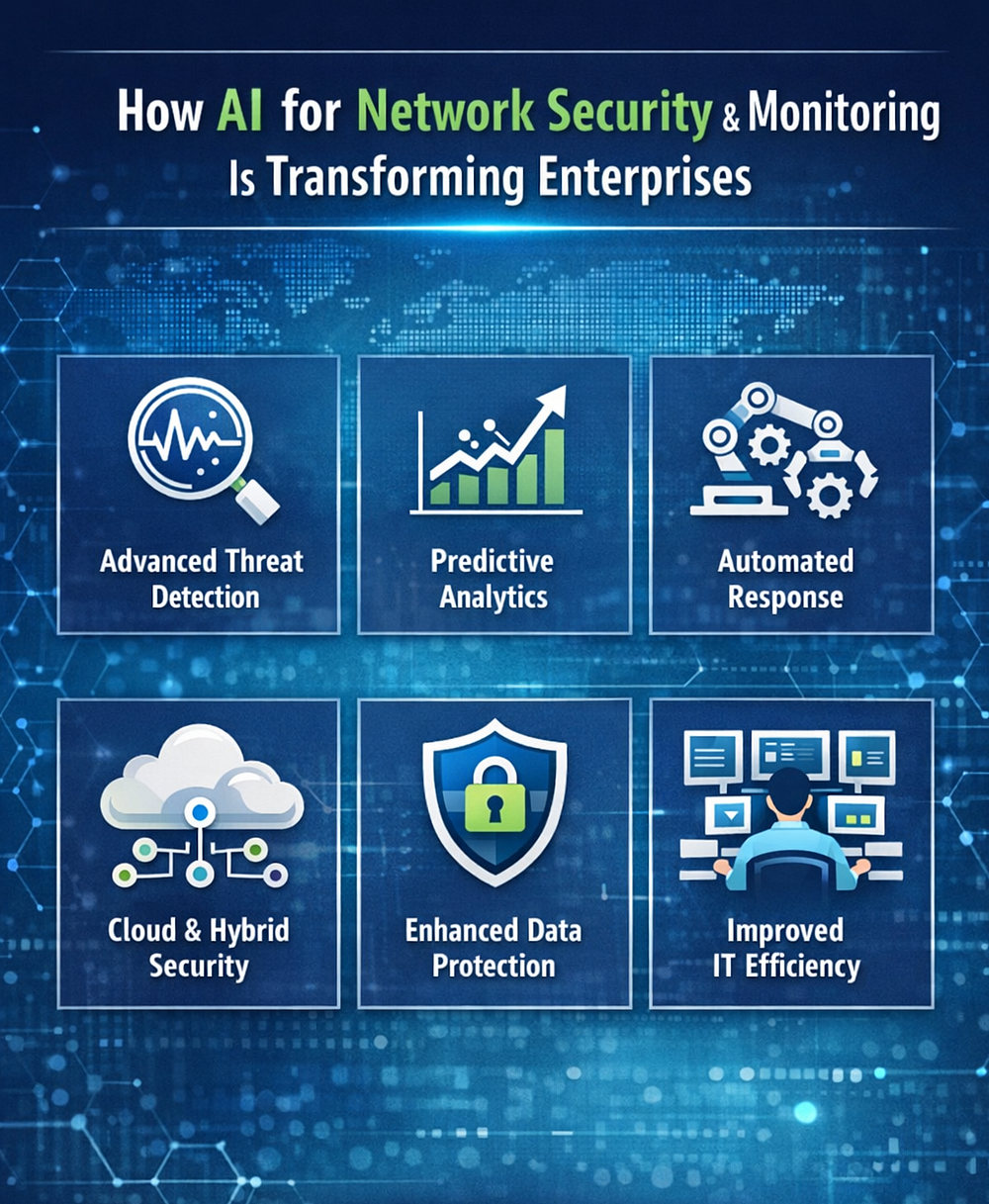
One of the key advantages of AI-enabled network monitoring is its ability to detect subtle anomalies that traditional systems often miss. Machine learning models are trained on historical traffic data and normal behavior patterns, enabling them to identify deviations that may indicate emerging threats or vulnerabilities. This capability reduces false positives and enhances accuracy, empowering security teams to focus on genuine risks and actionable insights rather than sifting through overwhelming alerts.
Moreover, AI brings predictive capabilities to the forefront of cybersecurity. Rather than merely reacting to threats after they occur, intelligent monitoring tools analyze trends and patterns to anticipate risks before they escalate. This predictive strength allows enterprises to prevent breaches, optimize resource allocation, and maintain uninterrupted business operations. In environments that combine on-premises infrastructure with cloud and edge computing, such foresight becomes invaluable.
Automation further amplifies the power of AI in network protection. By automating routine tasks- such as incident correlation, alert prioritization, and compliance reporting - AI not only increases efficiency but also reduces the scope for human error. Especially in organizations with limited security personnel or overburdened IT teams, this automation delivers significant operational advantages. It allows security professionals to concentrate on strategic problem-solving, threat hunting, and planning rather than manual log analysis.
To understand how these transformative capabilities are being implemented in real enterprise contexts, it’s worth exploring the insights from . This article sheds light on the practical impact of AI technologies in strengthening network resilience, improving threat detection, and enhancing organizational agility.
AI-powered network security and monitoring also improve scalability - a key requirement for businesses expanding their digital footprint. As networks grow to include remote users, IoT devices, and multi-cloud services, manual monitoring becomes untenable. AI systems, on the other hand, can adapt to varied environments without compromising visibility or performance.
In summary, AI is reshaping the way enterprises approach network security and monitoring. By enabling predictive analytics, automated responses, and comprehensive insights, AI helps organizations stay ahead of sophisticated cyber threats while optimizing operational workflows. For enterprises committed to securing their digital future, integrating AI into security and monitoring frameworks is no longer optional-it is essential.

